Home
Issues
Aims and Scope
Open Access
Editorial Board
Indexing
Why publish with us
Contact us
Instructions to authors (PDF)
Manuscript Types
Manuscript Formatting
How to submit
Preprints
Special Publications & Reprints
Authorship & COI
Principles of Transparency Checklist
Data Policies
Publication Ethics and Publication Malpractice Statement

RESEARCH PAPER
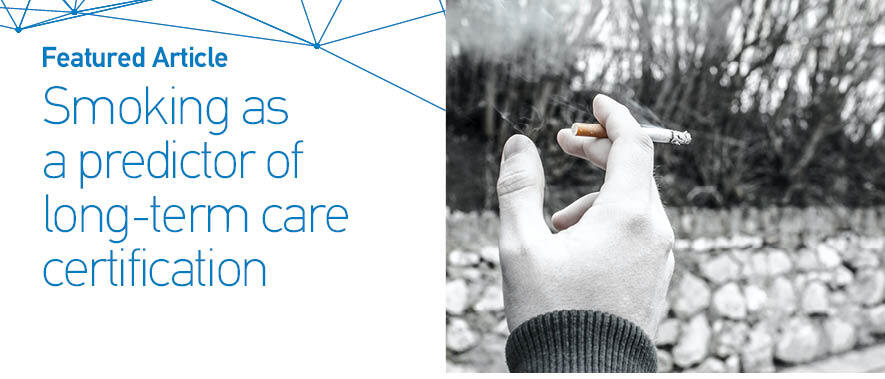
Smoking as an independent predictor of long term care certification: The Yamagata cohort study
1
School of Nursing, Faculty of Medicine, Yamagata University, Yamagata, Japan
2
Department of Public Health and Hygiene, Yamagata University Graduate School of Medical Science, Yamagata, Japan
Submission date: 2026-05-05
Final revision date: 2026-06-19
Acceptance date: 2026-06-26
Publication date: 2026-07-10
Corresponding author
Yoko Matsunami
Department of Clinical Nursing, Yamagata University School of Medicine, 2-2-2 Iida-Nishi, Yamagata 990-9585, Japan
Department of Clinical Nursing, Yamagata University School of Medicine, 2-2-2 Iida-Nishi, Yamagata 990-9585, Japan
Tob. Induc. Dis. 2026;24(July):106

KEYWORDS
TOPICS
ABSTRACT
Introduction:
Smoking has been associated with disease risk; however, whether smoking is an independent predictor of long-term care (LTC) certification remains uninvestigated. Therefore, this study aimed to examine the association between smoking status and LTC certification.
Methods:
This prospective cohort study was conducted using data from the Yamagata cohort study in Japan. Participants were followed for a mean of 7.6 years (SD=1.8). Individuals with available baseline data on smoking status and relevant covariates were included. The main exposure was baseline smoking status (current, former, and never smokers), and the primary outcome was LTC certification incidence during follow-up. Associations between smoking status and LTC certification were evaluated using Cox proportional hazards models, with sequential adjustment for potential confounders, including demographic factors, lifestyle habits, and comorbidities.
Results:
At baseline, the overall smoking prevalence rate was 12.4% (22.4% in men, 4.6% in women). At a mean follow-up of 7.6 years (SD=1.8), LTC certification was issued to 262 (2.6%) individuals: 137 men (3.0%), and 125 women (2.1%). Unadjusted analysis using a Cox proportional hazards model indicated a higher hazard ratio (HR) for current smokers (HR=1.44; 95% CI: 1.03–2.02), which remained significant after adjustment for sex and age (AHR=1.81; 95% CI: 1.23– 2.66). This persisted even after adjusting for sex, age, physical activity, alcohol consumption, hypertension, diabetes, and dyslipidemia (AHR=1.83; 95% CI: 1.25–2.69), and after accounting for nine factors, including stroke and ischemic heart disease (AHR=1.86; 95% CI: 1.27–2.73). Never and former smokers showed no differences in adjusted models. A sensitivity analysis excluding patients with a history of cardiovascular disease yielded similar AHRs.
Conclusions:
Overall, current smokers had a higher risk of LTC certification than never smokers, suggesting that smoking may be an independent risk factor.
Smoking has been associated with disease risk; however, whether smoking is an independent predictor of long-term care (LTC) certification remains uninvestigated. Therefore, this study aimed to examine the association between smoking status and LTC certification.
Methods:
This prospective cohort study was conducted using data from the Yamagata cohort study in Japan. Participants were followed for a mean of 7.6 years (SD=1.8). Individuals with available baseline data on smoking status and relevant covariates were included. The main exposure was baseline smoking status (current, former, and never smokers), and the primary outcome was LTC certification incidence during follow-up. Associations between smoking status and LTC certification were evaluated using Cox proportional hazards models, with sequential adjustment for potential confounders, including demographic factors, lifestyle habits, and comorbidities.
Results:
At baseline, the overall smoking prevalence rate was 12.4% (22.4% in men, 4.6% in women). At a mean follow-up of 7.6 years (SD=1.8), LTC certification was issued to 262 (2.6%) individuals: 137 men (3.0%), and 125 women (2.1%). Unadjusted analysis using a Cox proportional hazards model indicated a higher hazard ratio (HR) for current smokers (HR=1.44; 95% CI: 1.03–2.02), which remained significant after adjustment for sex and age (AHR=1.81; 95% CI: 1.23– 2.66). This persisted even after adjusting for sex, age, physical activity, alcohol consumption, hypertension, diabetes, and dyslipidemia (AHR=1.83; 95% CI: 1.25–2.69), and after accounting for nine factors, including stroke and ischemic heart disease (AHR=1.86; 95% CI: 1.27–2.73). Never and former smokers showed no differences in adjusted models. A sensitivity analysis excluding patients with a history of cardiovascular disease yielded similar AHRs.
Conclusions:
Overall, current smokers had a higher risk of LTC certification than never smokers, suggesting that smoking may be an independent risk factor.
ACKNOWLEDGEMENTS
The authors sincerely thank all participants of the Yamagata cohort study. We would like to thank Editage (www.editage.jp) for English language editing.
CONFLICTS OF INTEREST
The authors have each completed and submitted an ICMJE Form for Disclosure of Potential Conflicts of Interest. The authors declare that they have no competing interests, financial or otherwise, related to the current work. Y. Matsunami reports that since the initial planning of the work she was funded by FY2026 Research Grant from Japan Society for Tobacco control. She received funding support for English language editing of this manuscript. Payment was made to the author’s
institution.
FUNDING
This work was supported by a Grant-in-Aid from the 21st Century Center of Excellence (COE) and Global COE Program of the Japan Society for the Promotion of Science. This work was supported by the FY2026 Research Grant from the Japan Society for Tobacco Control, which provided funding for proofreading and English language editing.
ETHICAL APPROVAL AND INFORMED CONSENT
Ethical approval was obtained from the Ethics Review Committee of Yamagata University (Approval number: 2023-295; Date: 7 February 2024). Participants provided informed consent.
DATA AVAILABILITY
The data supporting this study cannot be made available for privacy or ethical reasons, but are available from the corresponding author upon reasonable request after receiving permission from the Ethics Committee of Yamagata University.
AUTHORS' CONTRIBUTIONS
YM and TK: conceptualization, methodology. YM, TK, MS, RS and NS: formal analysis. YM: writing of original draft. TK, MS, RS, NS and MF: writing, reviewing and editing of the manuscript. TK, MS, RS and NS: supervision. All authors read and approved the final version of the manuscript.
ADDITIONAL INFORMATION
The content has been provided by the author(s) and has not been reviewed, verified, or endorsed by European Publishing. It may not have undergone peer review. The views, opinions, and recommendations expressed are solely those of the author(s) and do not necessarily reflect the position of European Publishing. European Publishing accepts no responsibility or liability for any consequences arising from the use of, or reliance on, this content.
PROVENANCE AND PEER REVIEW
Not commissioned; externally peer reviewed.
REFERENCES (37)
1.
Cabinet Office, Government of Japan. Annual report on the ageing society 2025; June, 2025. Accessed June 26, 2026. https://www8.cao.go.jp/kourei/...
2.
Jin X, Mori T, Sato M, Watanabe T, Noguchi H, Tamiya N. Individual and regional determinants of long-term care expenditure in Japan: evidence from national long-term care claims. Eur J Public Health. 2020;30(5):873-878. doi:10.1093/eurpub/ckaa065
3.
Olivares-Tirado P, Tamiya N, Kashiwagi M, Kashiwagi K. Predictors of the highest long-term care expenditures in Japan. BMC Health Serv Res. 2011;11:103. doi:10.1186/1472-6963-11-103
4.
Yamada M, Arai H. Long-term care system in Japan. Ann Geriatr Med Res. 2020;24(3):174-180. doi:10.4235/agmr.20.0037
5.
National Center for Chronic Disease Prevention and Health Promotion (US), Office on Smoking and Health. How tobacco smoke causes disease: the biology and behavioral basis for smoking-attributable disease: a report of the Surgeon General. Centers for Disease Control and Prevention (US); 2010. Accessed June 26, 2026. [Report in Japanese]. https://www.ncbi.nlm.nih.gov/b...
6.
Ikeda N, Inoue M, Iso H, et al. Adult mortality attributable to preventable risk factors for non-communicable diseases and injuries in Japan: a comparative risk assessment. PLoS Med. 2012;9(1):e1001160. doi:10.1371/journal.pmed.1001160
7.
Hozawa A, Okamura T, Murakami Y, et al. Joint impact of smoking and hypertension on cardiovascular disease and all-cause mortality in Japan: NIPPON DATA80, a 19-year follow-up. Hypertens Res. 2007;30(12):1169-1175. doi:10.1291/hypres.30.1169
8.
Iso H, Date C, Yamamoto A, et al. Smoking cessation and mortality from cardiovascular disease among Japanese men and women: the JACC study. Am J Epidemiol. 2005;161(2):170-179. doi:10.1093/aje/kwi027
9.
Fletcher C, Peto R. The natural history of chronic airflow obstruction. Br Med J. 1977;1(6077):1645-1648. doi:10.1136/bmj.1.6077.1645
10.
Willi C, Bodenmann P, Ghali WA, Faris PD, Cornuz J. Active smoking and the risk of type 2 diabetes: a systematic review and meta-analysis. JAMA. 2007;298(22):2654-2664. doi:10.1001/jama.298.22.2654
11.
Deal JA, Power MC, Palta P, et al. Relationship of cigarette smoking and time of quitting with incident dementia and cognitive decline. J Am Geriatr Soc. 2020;68(2):337-345. doi:10.1111/jgs.16228
12.
Ohara T, Ninomiya T, Hata J, et al. Midlife and late-life smoking and risk of dementia in the community: the Hisayama study. J Am Geriatr Soc. 2015;63(11):2332-2339. doi:10.1111/jgs.13794
13.
Ward KD, Klesges RC. A meta-analysis of the effects of cigarette smoking on bone mineral density. Calcif Tissue Int. 2001;68(5):259-270. doi:10.1007/BF02390832
14.
Kanis JA, Johnell O, Oden A, et al. Smoking and fracture risk: a meta-analysis. Osteoporos Int. 2005;16(2):155-162. doi:10.1007/s00198-004-1640-3
15.
Takashima N, Miura K, Hozawa A, et al. Cigarette smoking in middle age and a long-term risk of impaired activities of daily living: NIPPON DATA80. Nicotine Tob Res. 2010;12(9):944-949. doi:10.1093/ntr/ntq121
16.
Kojima G, Iliffe S, Walters K. Smoking as a predictor of frailty: a systematic review. BMC Geriatr. 2015;15:131. doi:10.1186/s12877-015-0134-9
17.
Ministry of Health, Labour and Welfare (MHLW), Japan. 2022 (Reiwa 4) Nen kokumin seikatsu kiso chōsa no gaiyō [Comprehensive survey of living conditions in 2022]; 2022. Accessed June 26, 2026. [Report in Japanese]. https://www.mhlw.go.jp/toukei/...
18.
Tsuji I. Kenkō jūmyō oyobi chiiki kakusa no yōin bunseki to kenkō zōshin taisaku no kōka kenshō ni kansuru kenkyū [Research on factor analysis of healthy life expectancy and regional disparities and verification of the effects of health promotion measures]. Department of Public Health, Tohoku University Graduate School of Medicine; 2017. Accessed June 26, 2026. [Report in Japanese]. http://www.pbhealth.med.tohoku...
19.
Kitamura A, Seino S, Taniguchi Y, et al. Kōreisha no jiritsu sōshitsu ni oyobosu seikatsu shūkanbyō, kinōteki kenkō no renkan inshi no eikyō: Kusatsumachi kenkyū [Impact of lifestyle-related diseases and frailty on the incidence of loss of independence in Japanese community-dwelling older adults: a longitudinal study on aging and health in Kusatsu]. Nihon Koshu Eisei Zasshi. 2020;67(2):134-145. doi:10.11236/jph.67.2_134
20.
Hara M, Sobue T, Sasaki S, Tsugane S. Smoking and risk of premature death among middle-aged Japanese: ten-year follow-up of the Japan public health center-based prospective study on cancer and cardiovascular diseases (JPHC study) cohort I. Jpn J Cancer Res. 2002;93(1):6-14. doi:10.1111/j.1349-7006.2002.tb01194.x
21.
Duncan MS, Freiberg MS, Greevy RA Jr, Kundu S, Vasan RS, Tindle HA. Association of smoking cessation with subsequent risk of cardiovascular disease. JAMA. 2019;322(7):642-650. doi:10.1001/jama.2019.10298
22.
Bullen C. Impact of tobacco smoking and smoking cessation on cardiovascular risk and disease. Expert Rev Cardiovasc Ther. 2008;6(6):883-895. doi:10.1586/14779072.6.6.883
23.
Rigotti NA, Clair C. Managing tobacco use: the neglected cardiovascular disease risk factor. Eur Heart J. 2013;34(42):3259-3267. doi:10.1093/eurheartj/eht352
24.
Anthonisen NR, Skeans MA, Wise RA, et al. The effects of a smoking cessation intervention on 14.5-year mortality: a randomized clinical trial. Ann Intern Med. 2005;142(4):233-239. doi:10.7326/0003-4819-142-4-200502150-00005
25.
Kashiwagi A, Kasuga M, Araki E, et al. International clinical harmonization of glycated hemoglobin in Japan: from Japan diabetes society to national glycohemoglobin standardization program values. J Diabetes Investig. 2012;3(1):39-40. doi:10.1111/j.2040-1124.2012.00207.x
26.
Kokumin kenkō eiyō chōsa [National health and nutrition survey]. Ministry of Health, Labour and Welfare, Japan. Accessed June 26, 2026. [Website in Japanese]. https://www.mhlw.go.jp/bunya/k...
27.
Thomson CA, Harris RB, Craft NE, Hakim IA. A cross-sectional analysis demonstrated the healthy volunteer effect in smokers. J Clin Epidemiol. 2005;58(4):378-382. doi:10.1016/j.jclinepi.2004.10.013
28.
Fry A, Littlejohns TJ, Sudlow C, et al. Comparison of sociodemographic and health-related characteristics of UK Biobank participants with those of the general population. Am J Epidemiol. 2017;186(9):1026-1034. doi:10.1093/aje/kwx246
29.
Amaral AFS, Strachan DP, Burney PGJ, Jarvis DL. Female smokers are at greater risk of airflow obstruction than male smokers. UK Biobank. Am J Respir Crit Care Med. 2017;195(9):1226-1235. doi:10.1164/rccm.201608-1545OC
30.
Sørheim IC, Johannessen A, Gulsvik A, Bakke PS, Silverman EK, DeMeo DL. Gender differences in COPD: are women more susceptible to smoking effects than men?. Thorax. 2010;65(6):480-485. doi:10.1136/thx.2009.122002
31.
Prescott E, Bjerg AM, Andersen PK, Lange P, Vestbo J. Gender difference in smoking effects on lung function and risk of hospitalization for COPD: results from a Danish longitudinal population study. Eur Respir J. 1997;10(4):822-827.
32.
Hardin M, Cho MH, Sharma S, et al. Sex-based genetic association study identifies CELSR1 as a possible chronic obstructive pulmonary disease risk locus among women. Am J Respir Cell Mol Biol. 2017;56(3):332-341. doi:10.1165/rcmb.2016-0172OC
33.
Ben-Zaken Cohen S, Paré PD, Man SF, Sin DD. The growing burden of chronic obstructive pulmonary disease and lung cancer in women: examining sex differences in cigarette smoke metabolism. Am J Respir Crit Care Med. 2007;176(2):113-120. doi:10.1164/rccm.200611-1655PP
34.
Peng J, Xu X, Mace BE, et al. Estrogen metabolism within the lung and its modulation by tobacco smoke. Carcinogenesis. 2013;34(4):909-915. doi:10.1093/carcin/bgs402
35.
Huxley RR, Woodward M. Cigarette smoking as a risk factor for coronary heart disease in women compared with men: a systematic review and meta-analysis of prospective cohort studies. Lancet. 2011;378(9799):1297-1305. doi:10.1016/S0140-6736(11)60781-2
36.
Leas EC, Zablocki RW, Edland SD, Al-Delaimy WK. Smokers who report smoking but do not consider themselves smokers: a phenomenon in need of further attention. Tob Control. 2015;24(4):400-403. doi:10.1136/tobaccocontrol-2013-051400
37.
Connor Gorber S, Schofield-Hurwitz S, Hardt J, Levasseur G, Tremblay M. The accuracy of self-reported smoking: a systematic review of the relationship between self-reported and cotinine-assessed smoking status. Nicotine Tob Res. 2009;11(1):12-24. doi:10.1093/ntr/ntn010
Share
RELATED ARTICLE
| eISSN: | 1617-9625 |

We process personal data collected when visiting the website. The function of obtaining information about users and their behavior is carried out by voluntarily entered information in forms and saving cookies in end devices. Data, including cookies, are used to provide services, improve the user experience and to analyze the traffic in accordance with the Privacy policy. Data are also collected and processed by Google Analytics tool (more).
You can change cookies settings in your browser. Restricted use of cookies in the browser configuration may affect some functionalities of the website.
You can change cookies settings in your browser. Restricted use of cookies in the browser configuration may affect some functionalities of the website.