


INTRODUCTION
Tobacco use remains a major preventable cause of morbidity and mortality worldwide, with recent global health estimates attributing more than seven million deaths each year to tobacco1. Nicotine dependence is sustained by interacting biological, psychological, behavioral, and social processes, and many people who smoke relapse despite pharmacological support such as nicotine replacement therapy, varenicline, or bupropion2,3. Psychological interventions are therefore important because they can address beliefs, routines, cues, and coping behaviors that maintain tobacco use.
Cognitive Behavioral Therapy (CBT) is one of the most established psychological approaches to smoking cessation. It typically aims to help individuals identify smoking-related thoughts and triggers, develop alternative coping strategies, manage cravings and withdrawal symptoms, and prevent relapse4,5. Controlled trials have compared CBT with usual care, brief advice, supportive counseling, pharmacotherapy alone, and other control conditions, but their findings have been inconsistent5,6. This inconsistency may reflect variation in CBT intensity, delivery format, population characteristics, and outcome definitions7-9.
Previous reviews have provided important summaries of behavioral interventions for tobacco cessation, but many have focused on specific populations or have combined CBT with other behavioral approaches, making it difficult to isolate the contribution of CBT6-8. In addition, complete abstinence and smoking reduction are often treated as related outcomes, although they may require different therapeutic mechanisms. The present systematic review and meta-analysis, therefore, aimed to estimate the pooled effect of CBT on two outcomes: smoking abstinence and smoking reduction.
METHODS
Review protocol and search strategy
This systematic review and meta-analysis were conducted in accordance with the Preferred Reporting Items for Systematic Reviews and Meta-Analyses (PRISMA) 2020 statement10. PubMed, Web of Science, Scopus, ScienceDirect, SpringerLink, ACM Digital Library, IEEE Xplore, and Google Scholar were searched to identify relevant studies. The search was conducted on 15 January 2026 and covered publications from 1 January 2000 to the search date. The date restriction was selected to focus on contemporary CBT protocols, and outcome definitions used after the widespread adoption of modern evidence-based cessation services; older trials were considered less comparable with contemporary pharmacotherapy and behavioral-support contexts. The complete database-specific search strings are presented in Supplementary file Table 1.
Records were imported into a reference-management spreadsheet, and automated duplicate detection based on title, author, year, and digital object identifier was followed by manual verification. The screening and extraction procedures were conducted by the author; because a second independent reviewer was not available, borderline decisions were checked twice against the eligibility criteria before final inclusion.
Eligibility criteria
Studies were eligible if they were randomized controlled trials or controlled quasi-experimental studies, included people who smoked, and evaluated CBT as a primary or major intervention component. CBT could be delivered individually, in groups, digitally, or through telehealth. Eligible comparators included no treatment, waitlist, usual care, brief advice, pharmacotherapy alone, or another psychological intervention that did not include CBT as its main component.
Studies had to report at least one smoking cessation outcome, including point-prevalence, continuous or prolonged abstinence, biochemically verified abstinence, or clinically meaningful smoking reduction. Non-original reports, single-arm studies, case reports, qualitative studies, protocols without results, dissertations, conference abstracts, preprints, and grey literature were excluded. Studies were also excluded if CBT was combined with another intensive psychotherapy in a way that prevented isolation of the CBT effect, if no non-CBT control group was available, if follow-up was shorter than four weeks after the quit date, or if a study had a high or critical risk of bias in key domains such as allocation, confounding, attrition, or outcome reporting.
Risk-of-bias assessment
Risk-of-bias was assessed using the revised Cochrane Risk-of-Bias 2 tool (RoB 2) for randomized trials and ROBINS-I for non-randomized controlled studies11,12. RoB 2 domains included bias arising from the randomization process, deviations from intended interventions, missing outcome data, outcome measurement, and selection of the reported result. ROBINS-I domains were summarized by focusing on confounding, selection, classification of interventions, deviations from intended interventions, missing data, outcome measurement, and selection of reported results. Overall judgments were classified as low risk, some concerns, or high risk for randomized trials, and as low, moderate, serious, or critical risk for non-randomized studies. Studies judged to have high or critical risk in key domains were excluded.
Study selection and data extraction
For each eligible study, data were extracted on study identifier, year, design, setting, population, sample size, CBT delivery format, comparator, outcome definition, intervention and control events, and intervention and control non-events. For smoking abstinence, an event was defined as complete cessation at follow-up. For smoking reduction, an event was defined as the study-reported clinically meaningful reduction in cigarette or tobacco consumption without necessarily achieving full abstinence. When a study reported percentages or proportions, these values were converted to event counts using the available denominators; when a zero cell occurred, a continuity correction of 0.5 was applied to all four cells for that study-specific comparison. A narrative synthesis and tabulation of study characteristics were conducted before quantitative pooling.
Statistical analysis
The common effect metric was the odds ratio (OR), with values above 1.00 favoring CBT over control conditions. Separate DerSimonian and Laird random-effects meta-analyses were conducted for smoking abstinence and smoking reduction because clinical and methodological heterogeneity was expected across CBT protocols, populations, comparator intensity, and follow-up definitions13. Statistical heterogeneity was assessed14 using Cochran’s Q, reported with degrees of freedom, the I2 statistic, and tau-squared. A two-sided p<0.05 was considered statistically significant. Analyses were conducted in Python 3.11 using NumPy, pandas, SciPy, and Matplotlib. Publication bias was assessed for outcomes with at least 10 studies using visual inspection of funnel plots and Egger’s regression15.
Exploratory sensitivity analyses included fixed-effect pooling, randomized-trial-only pooling, and leave-one-out analyses. Formal subgroup analyses by delivery format, population type, CBT intensity, and comparator type were limited by the small number of studies and sparse reporting; therefore, these analyses were interpreted descriptively rather than as confirmatory tests.
RESULTS
Study characteristics and extracted data
The search yielded 371 records. After the removal of 138 duplicates, 233 records were screened. Ninety records were excluded during title and abstract screening, and 143 reports were sought for full-text retrieval. Twenty-six reports could not be retrieved, leaving 117 full texts for eligibility assessment. A further 103 reports were excluded because of an ineligible design or absence of a control group, inability to isolate the effect of CBT, insufficient outcome data, high or critical risk of bias, follow-up shorter than four weeks, or non-original/duplicate publication status. Fourteen studies were included in the review and meta-analysis (Figure 1).
Figure 1
PRISMA flow diagram for the systematic review of cognitive behavioral therapy for smoking cessation. The diagram shows the search in 8 databases, from 1 January 2000 to 15 January 2026, reasons for excluding 103 full-text reports, and the number of studies included in each meta-analysis model
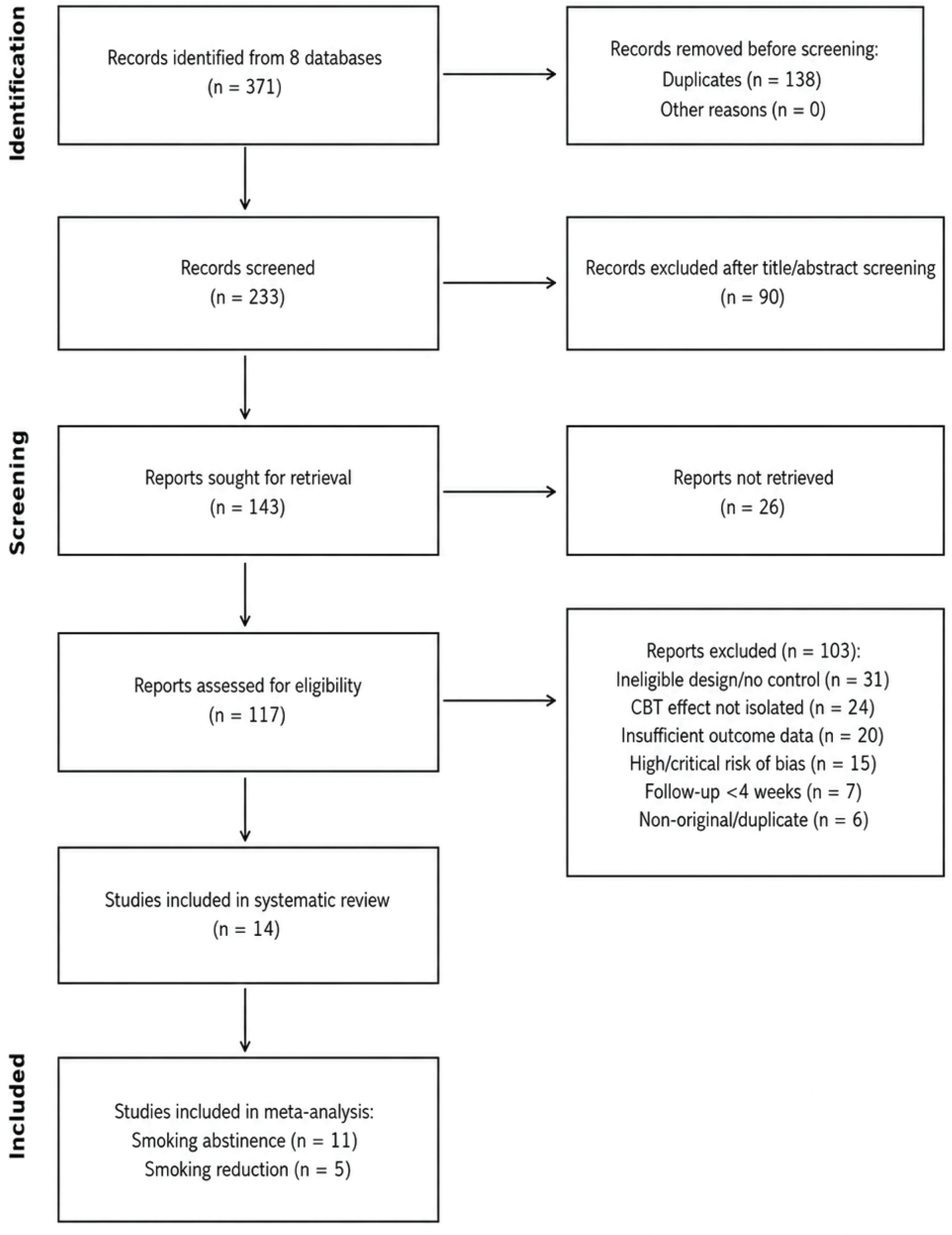
Fourteen studies met the eligibility criteria and contributed data to the quantitative synthesis16-29. Eleven studies reported smoking abstinence outcomes, and five reported smoking reduction outcomes; Baker et al.16 and Selvamary et al.29 contributed data to both outcomes. Study characteristics, including design, setting, sample size, population, intervention, and comparator, are presented in Table 1. The extracted 2×2 data used for effect-size calculation are presented in Table 2.
Table 1
Characteristics of the included controlled studies of cognitive behavioral therapy for smoking cessation from 1 January 2000 to 15 January 2026 (N=14)
| Study | Design | Setting/population | Sample size | CBT delivery | Comparator | Outcomes contributed |
|---|---|---|---|---|---|---|
| Baker et al.16 2006 | Randomized controlled trial | Psychotic disorder/mental-health setting; People with a psychotic disorder who smoked | 298 | Face-to-face CBT plus cessation support | Usual care/brief advice | abstinence, reduction |
| Castaldelli-Maia et al.17 2018 | Controlled observational study | Real-world cessation treatment service; People with and without mental or substance use disorders | 696 | Clinic-based behavioral/CBT-oriented treatment | Non-CBT or less intensive support | abstinence |
| Castaldelli-Maia et al.18 2013 | Controlled observational study | Addiction care unit; People receiving smoking cessation treatment | 367 | Clinic-based behavioral/CBT-oriented treatment | Non-CBT or less intensive support | abstinence |
| Evins et al.19 2001 | Pilot randomized trial | Schizophrenia treatment setting: People with schizophrenia who smoked | 18 | CBT with pharmacotherapy support | Control condition | reduction |
| Farooq et al.20 2020 | Randomized controlled trial | Public-health/dental setting; Adults who smoked | 60 | Cognitive behavioral therapy | Basic health education | reduction |
| Hajisahneh et al.21 2025 | Controlled intervention trial | Community/relapse-prevention setting; Iranian people who smoked | 235 | Cognitive behavioral relapse-prevention intervention | Control condition | abstinence |
| Hendricks et al.22 2010 | Randomized controlled trial | Tobacco-dependence treatment setting: People receiving extended treatment for tobacco dependence | 199 | Extended CBT for tobacco dependence | Standard cessation treatment | abstinence |
| Johnson et al.23 2026 | Pilot randomized clinical trial | Smoking cessation trial setting: People seeking smoking cessation treatment | 82 | CBT-supported cessation program | Active comparator | abstinence |
| Martínez-Vispo et al.24 2019 | Randomized controlled trial | Smoking cessation treatment setting: Adults who smoked | 219 | CBT with behavioral activation | Standard CBT/ control condition | abstinence |
| Morean et al.25 2015 | Randomized controlled trial | Adolescent smoking cessation trial: Highly impulsive adolescent smokers | 64 | Cognitive behavioral therapy | Contingency management | abstinence |
| Mueller et al.26 2012 | Randomized controlled trial | Alcohol detoxification treatment setting: People receiving alcohol detoxification treatment who smoked | 103 | CBT smoking cessation during detoxification | Control condition | reduction |
| Park et al.27 2014 | Randomized comparative trial | Nicotine dependence treatment setting: People with nicotine dependence | 30 | Cognitive behavioral therapy | Virtual cue exposure therapy | abstinence |
| Rovina et al.28 2009 | Controlled clinical-practice study | Respiratory clinical-practice setting; People receiving smoking cessation treatment in clinical practice | 71 | Behavioral/CBT-oriented cessation intervention | Pharmacotherapy or behavioral comparator | abstinence |
| Selvamary et al.29 2016 | Randomized controlled trial | Hospital dental setting; People using tobacco in a dental setting | 194 | Cognitive behavior therapy | Basic advice/ control support | abstinence, reduction |
Table 2
Extracted outcome data and odds ratios for smoking abstinence and smoking reduction in the included studies, with outcome definitions used for synthesis
| Study | Outcome | Outcome definition used for synthesis | Treatment events | Treatment non-events | Control events | Control non-events | OR | 95 % CI |
|---|---|---|---|---|---|---|---|---|
| Baker et al.16 2006 | abstinence | Complete abstinence at follow-up | 27 | 120 | 10 | 141 | 3.17 | 1.48–6.82 |
| Baker et al.16 2006 | reduction | Study-defined smoking reduction among continuing smokers | 46 | 101 | 27 | 124 | 2.09 | 1.22–3.60 |
| Castaldelli-Maia et al.17 2018 | abstinence | Complete abstinence at follow-up | 86 | 191 | 144 | 275 | 0.86 | 0.62–1.19 |
| Castaldelli-Maia et al.18 2013 | abstinence | Complete abstinence at follow-up | 68 | 80 | 69 | 150 | 1.85 | 1.20–2.84 |
| Evins et al.19 2001 | reduction | Study-defined reduction in smoking; threshold varied across reports | 6 | 3 | 1 | 8 | 16.00 | 1.32–194.63 |
| Farooq et al.20 2020 | reduction | Study-defined tobacco-use reduction at follow-up | 4 | 26 | 1 | 29 | 4.46 | 0.47–42.52 |
| Hajisahneh et al.21 2025 | abstinence | Complete abstinence at follow-up | 91 | 21 | 116 | 7 | 0.26 | 0.11–0.64 |
| Hendricks et al.22 2010 | abstinence | Complete abstinence at follow-up | 54 | 45 | 34 | 66 | 2.33 | 1.31–4.13 |
| Johnson et al.23 2026 | abstinence | Complete abstinence at follow-up | 17 | 25 | 4 | 36 | 6.12 | 1.84–20.38 |
| Martínez-Vispo et al.24 2019 | abstinence | Complete abstinence at follow-up | 71 | 39 | 50 | 59 | 2.15 | 1.25–3.70 |
| Morean et al.25 2015 | abstinence | Complete abstinence at follow-up | 0 | 22 | 15 | 27 | 0.04 | 0.00–0.70 |
| Mueller et al.26 2012 | reduction | Study-defined reduction in cigarette consumption | 17 | 36 | 8 | 42 | 2.48 | 0.96–6.42 |
| Park et al.27 2014 | abstinence | Complete abstinence at follow-up | 10 | 5 | 11 | 4 | 0.73 | 0.15–3.49 |
| Rovina et al.28 2009 | abstinence | Complete abstinence at follow-up | 10 | 25 | 7 | 29 | 1.66 | 0.55–5.00 |
| Selvamary et al.29 2016 | abstinence | Complete abstinence at follow-up | 64 | 30 | 30 | 70 | 4.98 | 2.71–9.15 |
| Selvamary et al.29 2016 | reduction | Study-defined tobacco-use reduction at follow-up | 51 | 43 | 75 | 25 | 0.40 | 0.22–0.73 |
Heterogeneity and sensitivity analyses
Substantial heterogeneity was observed for both outcomes (Table 3). For smoking abstinence, Q=61.36 (df=10, p<0.001), I2=83.70%, and τ2=0.56. For smoking reduction, Q=24.44 (df=4, p<0.001), I2=83.64%, and τ2=1.09.
Table 3
Heterogeneity, random-effects pooled estimates, and sensitivity analyses for smoking abstinence and smoking reduction in controlled studies of cognitive behavioral therapy for smoking cessation
| Analysis | Outcome | Number of studies | Pooled OR | 95% CI | Q (df) | I2 (%) | p |
|---|---|---|---|---|---|---|---|
| Primary random-effects | abstinence | 11 | 1.60 | 0.95–2.70 | 61.36 (10) | 83.70 | 0.078 |
| Fixed-effect sensitivity | abstinence | 11 | 1.56 | 1.29–1.87 | Not applicable | Not applicable | <0.001 |
| Primary random-effects | reduction | 5 | 1.96 | 0.66–5.81 | 24.44 (4) | 83.64 | 0.226 |
| Fixed-effect sensitivity | reduction | 5 | 1.26 | 0.87–1.81 | Not applicable | Not applicable | 0.216 |
| Randomized-trial-only sensitivity | abstinence | 8 | 1.66 | 0.79–3.46 | 41.65 (7) | 83.19 | 0.180 |
| Leave-one-out excluding Selvamary et al.29 2016 | reduction | 4 | 2.40 | 1.52–3.77 | Not applicable | 0.00 | <0.001 |
Leave-one-out analyses showed that the direction and precision of the abstinence estimate were sensitive to individual studies: excluding Castaldelli-Maia et al.17, Hajisahneh et al.21, or Morean et al.25 moved the random-effects abstinence estimate to statistical significance, whereas excluding several studies with favorable CBT effects moved it further toward the null. For smoking reduction, excluding Selvamary et al.29 changed the pooled estimate to OR=2.40 (95% CI: 1.52–3.77) and reduced I2 to 0.0%, indicating that this study was the main driver of heterogeneity in the reduction analysis. The randomized/controlled-trial-only sensitivity analysis for abstinence produced OR=1.66 (95% CI: 0.79–3.46), supporting a favorable but imprecise direction of effect.
Smoking abstinence
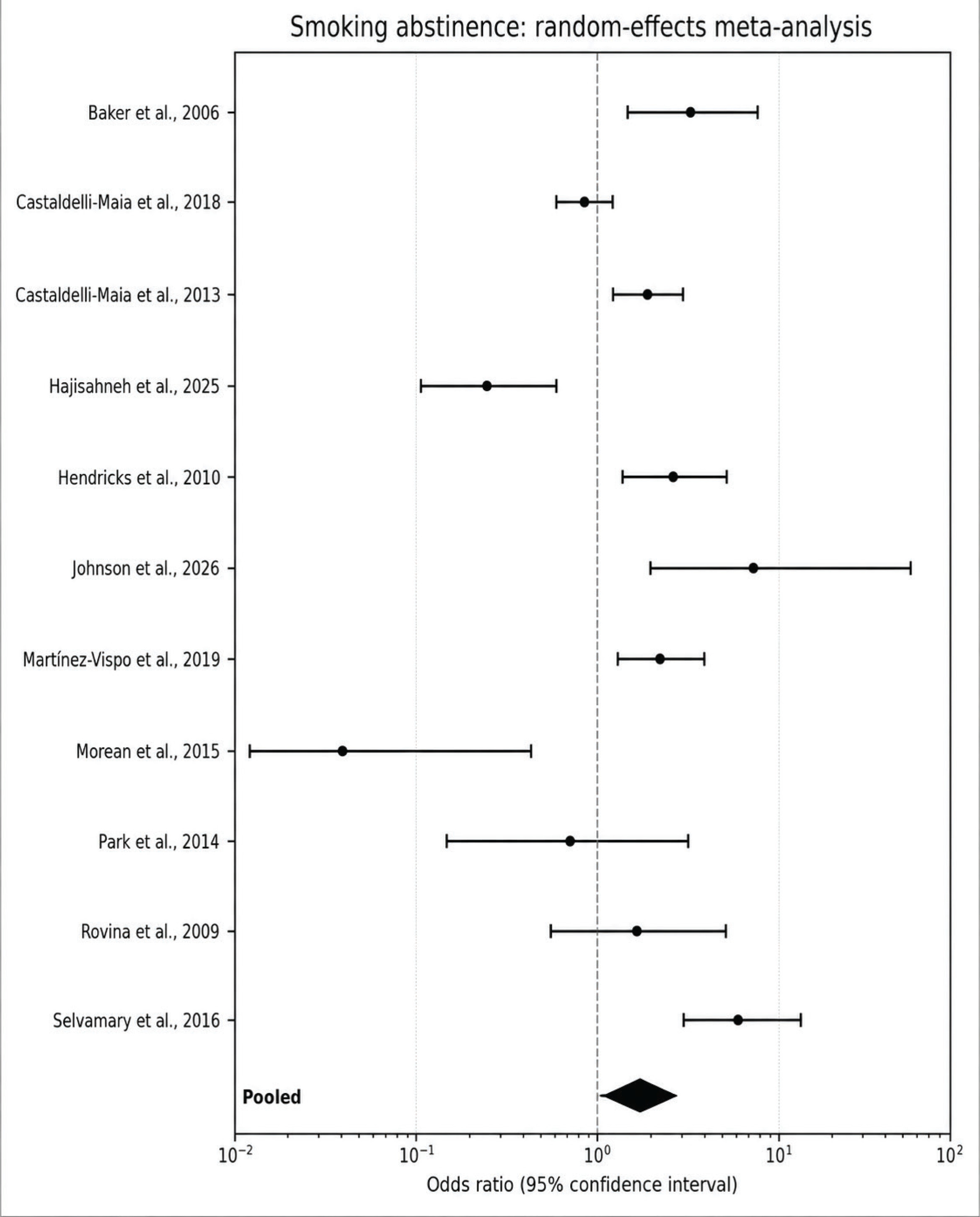
The meta-analysis of smoking abstinence included 11 studies. The random-effects pooled OR was 1.60 (95% CI: 0.95–2.70; z=1.76; p=0.078), indicating a favorable but not statistically conclusive association between CBT and complete smoking abstinence (Figure 2). A fixed-effect sensitivity analysis yielded OR=1.56 (95% CI: 1.29–1.87; p<0.001), but the random-effects estimate was considered more appropriate because heterogeneity was substantial.
Figure 2
Forest plot of odds ratios and 95% confidence intervals for smoking abstinence in eleven controlled studies of cognitive behavioral therapy for smoking cessation. The pooled diamond represents the DerSimonian and Laird random-effects estimate with values >1 favoring cognitive behavioral therapy
Smoking reduction
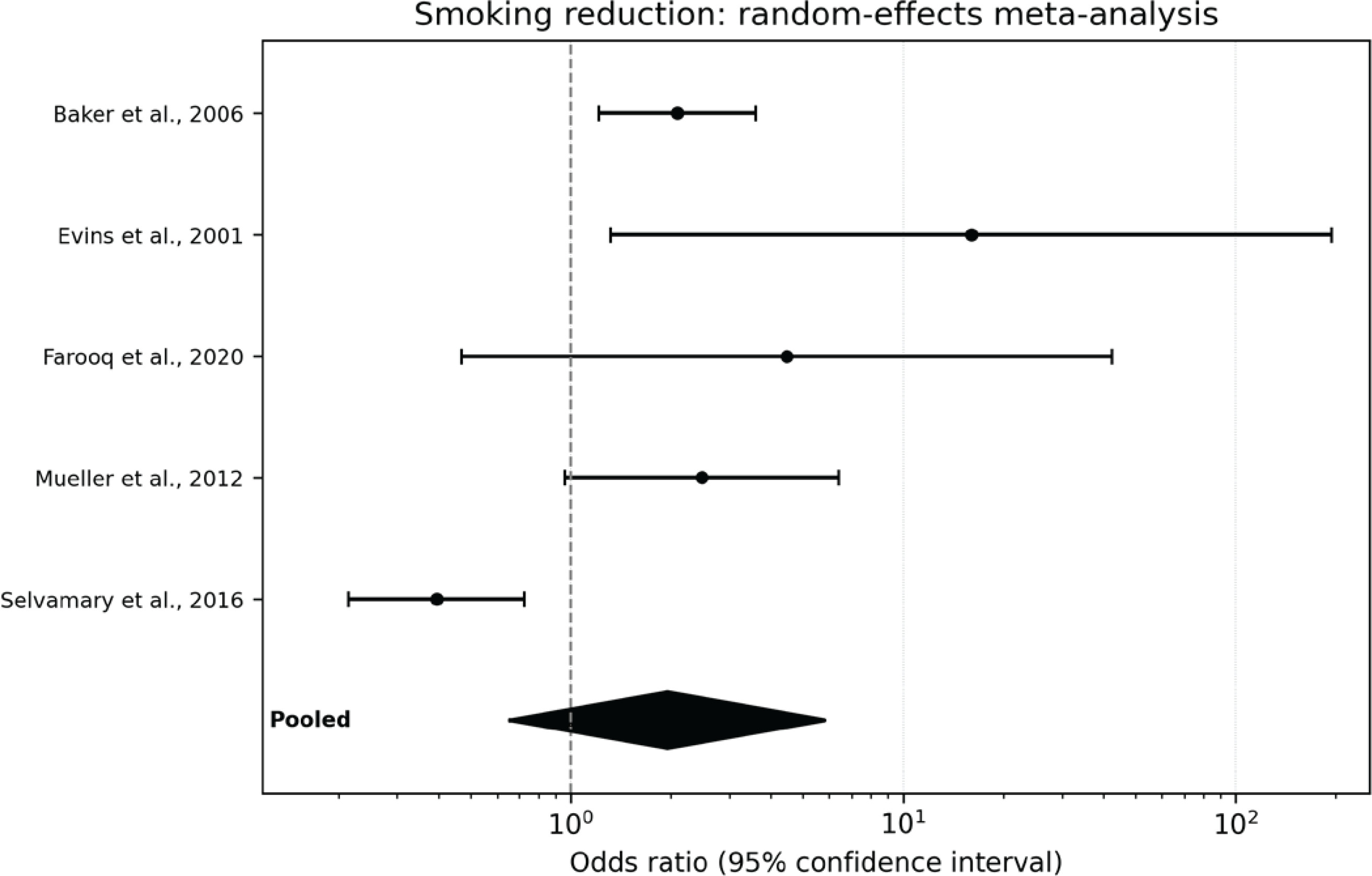
The smoking reduction analysis included five studies. The random-effects pooled OR was 1.96 (95% CI: 0.66–5.81; z=1.21; p=0.226), indicating no statistically conclusive advantage of CBT over control conditions for reducing cigarette or tobacco consumption (Figure 3). The study-specific definitions of reduction varied and were not consistently reported with comparable thresholds, so this outcome should be interpreted cautiously.
Figure 3
Forest plot of odds ratios and 95% confidence intervals for smoking reduction in five controlled studies of cognitive behavioral therapy for smoking cessation. The pooled diamond represents the DerSimonian and Laird random-effects estimate with values >1 favoring cognitive behavioral therapy
Risk-of-bias
Risk-of-bias assessment identified low risk or some concerns for most randomized trials and moderate risk for the controlled observational studies. Common reasons for some concerns included incomplete reporting of allocation procedures, lack of blinding for behavioral interventions, attrition, and incomplete information on prespecified outcome reporting. No included study was judged to have high or critical risk of bias in key domains (Table 4).
Table 4
Risk-of-bias assessment for the included controlled studies of cognitive behavioral therapy for smoking cessation (N=14)
| Study | Design/tool | Randomization or confounding | Deviations from intended intervention | Missing outcome data | Outcome measurement/ reporting | Overall judgment |
|---|---|---|---|---|---|---|
| Baker et al.16 2006 | RCT/RoB 2 | Some concerns | Low risk | Some concerns | Low risk | Some concerns |
| Castaldelli-Maia et al.17 2018 | Non-randomized/ROBINS–I | Moderate risk of confounding | Low/moderate | Moderate | Low/moderate | Moderate risk |
| Castaldelli-Maia et al. 18 2013 | Non-randomized/ROBINS–I | Moderate risk of confounding | Low/moderate | Moderate | Low/moderate | Moderate risk |
| Evins et al.19 2001 | Pilot RCT/RoB 2 | Some concerns | Low risk | Some concerns | Low risk | Some concerns |
| Farooq et al.20 2020 | RCT/RoB 2 | Some concerns | Low risk | Low risk | Some concerns | Some concerns |
| Hajisahneh et al.21 2025 | Controlled trial/RoB 2 | Some concerns | Low risk | Low risk | Some concerns | Some concerns |
| Hendricks et al.22 2010 | RCT/RoB 2 | Low risk | Low risk | Some concerns | Low risk | Some concerns |
| Johnson et al.23 2026 | Pilot RCT/RoB 2 | Some concerns | Low risk | Some concerns | Low risk | Some concerns |
| Martínez-Vispo et al.24 2019 | RCT/RoB 2 | Low risk | Low risk | Low risk | Low risk | Low risk |
| Morean et al.25 2015 | RCT/RoB 2 | Some concerns | Low risk | Some concerns | Low risk | Some concerns |
| Mueller et al.26 2012 | RCT/RoB 2 | Some concerns | Low risk | Some concerns | Low risk | Some concerns |
| Park et al.27 2014 | Randomized comparative trial/RoB 2 | Some concerns | Low risk | Some concerns | Some concerns | Some concerns |
| Rovina et al.28 2009 | Non-randomized/ROBINS–I | Moderate risk of confounding | Low/moderate | Moderate | Low/moderate | Moderate risk |
| Selvamary et al.29 2016 | RCT/RoB 2 | Some concerns | Low risk | Low risk | Some concerns | Some concerns |
Publication bias
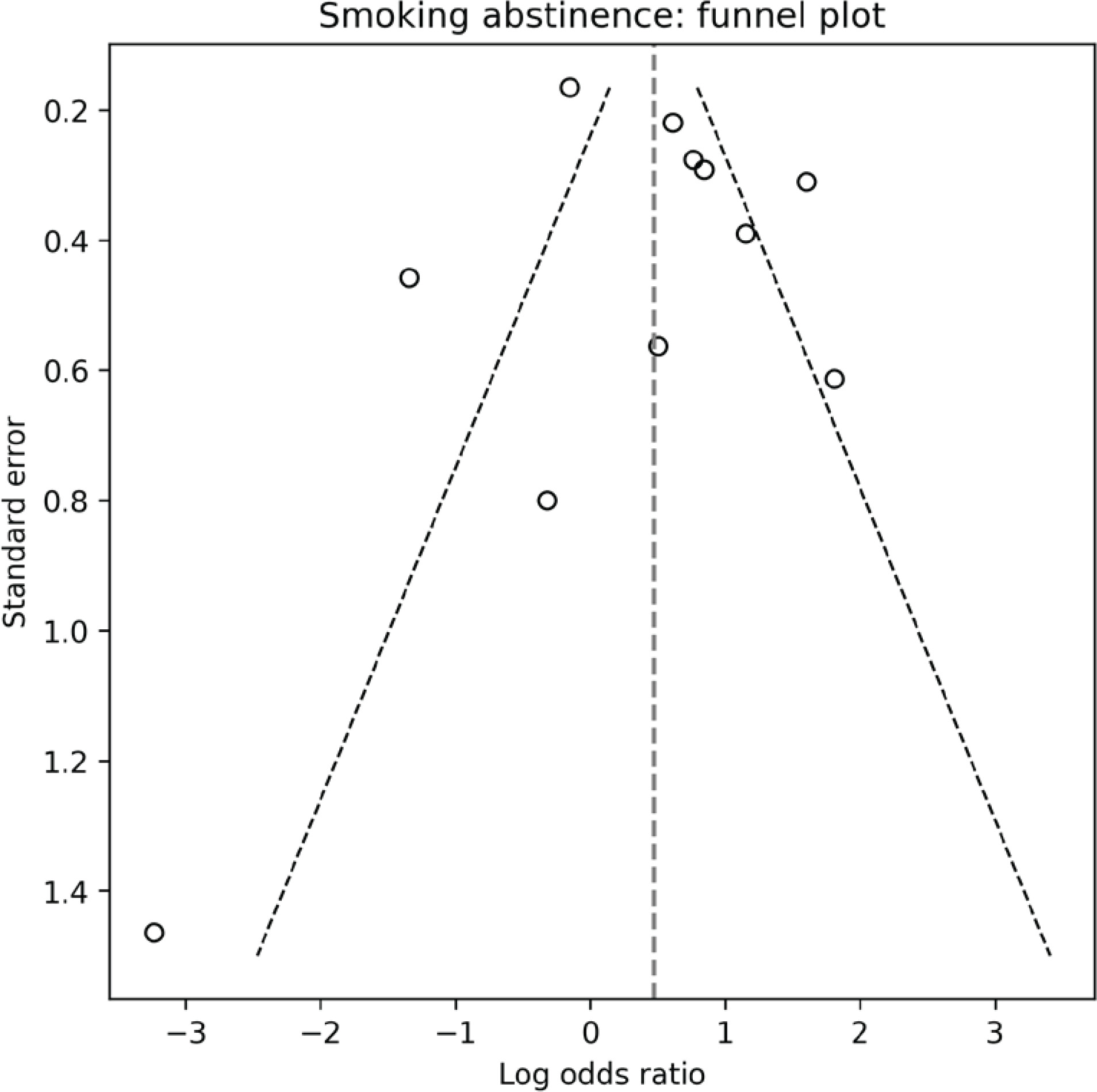
Publication bias was assessed quantitatively for smoking abstinence because 11 studies were available. The funnel plot showed visual asymmetry (Figure 4), and Egger’s regression produced an intercept of 3.041 with p=0.111. This result did not provide statistically compelling evidence of small-study effects, although the modest number of studies limits inference. Publication bias for smoking reduction could not be tested quantitatively because fewer than 10 studies were available, but selective publication remains possible because small studies with null reduction findings may be less likely to be published.
Figure 4
Funnel plot for publication bias assessment of smoking abstinence in eleven controlled studies of cognitive behavioral therapy for smoking cessation. The horizontal axis shows the log odds ratio, the vertical axis shows the standard error, and the dashed lines indicate the pooled effect and approximate 95% confidence interval region
DISCUSSION
Principal findings
This systematic review and meta-analysis found a favorable direction of effect for CBT on smoking abstinence, but the random-effects estimate was imprecise and did not reach the prespecified statistical significance threshold. The pooled effect for smoking reduction was also not statistically conclusive. These findings suggest that CBT may be more closely aligned with complete cessation than with reduced cigarette consumption, but the strength of this inference is limited by substantial between-study heterogeneity.
The observed distinction between abstinence and reduction outcomes is clinically plausible. Standard CBT for smoking cessation is designed to restructure smoking-related cognitions, strengthen self-efficacy, anticipate triggers, and build coping responses for high-risk situations4,5. These mechanisms may be particularly relevant when individuals aim to stop smoking completely and adopt a non-smoking identity. By contrast, smoking reduction may require additional or different components, such as controlled tapering, medication-supported reduction, or reinforcement-based strategies, which may not be central to all CBT protocols.
For clinical practice, these findings support considering CBT as one component of cessation services for people who are motivated to achieve complete abstinence, rather than as a uniformly effective stand-alone intervention across all settings. For people who are not ready to quit completely, CBT alone may be insufficient and may need to be combined with pharmacotherapy, motivational approaches, or contingency management. Because the included studies varied in delivery format, comparator intensity, population, and outcome definitions, implementation should be tailored to the clinical context and cessation goal.
Strengths and limitations
This review has several strengths. It focused on controlled studies in which CBT was a primary intervention component, separated abstinence from reduction outcomes, converted effects to clinically interpretable ORs, assessed risk of bias, explored heterogeneity, and conducted leave-one-out sensitivity analyses.
Several limitations should also be acknowledged. First, heterogeneity was substantial for both outcomes, reflecting differences in CBT content, session number, delivery format, comparator intensity, population characteristics, and outcome definitions. The pooled estimates should therefore be interpreted as average effects rather than effects expected in every setting. Second, subgroup analyses by delivery format, population type, CBT intensity, and comparator type were limited by sparse and uneven reporting. Third, only five studies reported smoking reduction, limiting statistical power and preventing robust assessment of publication bias for that outcome. Fourth, restricting inclusion to English-language peer-reviewed publications may have introduced language and publication bias. Fifth, some multimodal interventions were excluded to isolate CBT effects, which improves internal interpretability but may reduce generalizability to real-world cessation programs where CBT is commonly combined with pharmacotherapy or other behavioral strategies. Finally, aggregate data limited the exploration of individual participant-level moderators.
Future research
Future trials should define abstinence and reduction outcomes prospectively, use biochemical verification where feasible, and report sufficient data for meta-analysis. Research should examine whether treatment response varies by nicotine dependence, motivation to quit, psychiatric comorbidity, socioeconomic status, age, gender, and delivery format. Studies comparing standard CBT, enhanced CBT, digital CBT, and CBT combined with pharmacotherapy would help identify the most effective and cost-effective approaches. Individual participant data meta-analyses could further clarify who benefits most from CBT and for which cessation goals.
CONCLUSIONS
CBT showed a favorable direction of effect for smoking abstinence, but the primary random-effects estimate was imprecise, and heterogeneity was substantial. Evidence for smoking reduction was not statistically conclusive, suggesting that harm-reduction goals may require different or additional intervention components. Future research should refine CBT protocols, standardize outcome definitions, evaluate moderators of response, and address heterogeneity across populations and delivery settings.